
Popping Balloons with a Laser from LaserTo
It began as a scientific curiosity, a question whispered between pulses of light: could a concentrated beam of light really pop a balloon? As a laser enthusiast, the answer wasn’t something I wanted to just read about; I needed to see it, to conduct the experiment myself.
The setup was simple, yet it felt momentous. On a cleared wooden table, I placed a dark blue balloon—the color chosen deliberately, as darker pigments absorb light energy more efficiently. A few meters away, my prized possession: a handheld laser pointer, a modest but precisely engineered device capable of emitting a tight, coherent beam. The room was dimmed, not for drama, but to make the laser’s path visible—a slender, vibrant red line cutting through the air, a thread of pure energy.
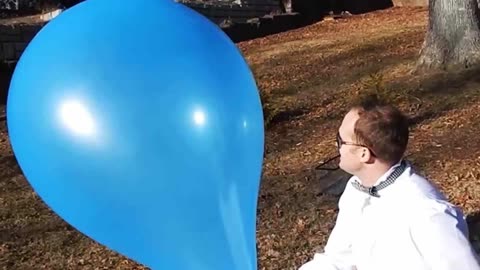
I took a breath, steadying my hand. The crimson dot found its mark on the balloon’s curved surface. For a second, nothing. Then, a tiny, intense point of light seemed to sink into the latex. The science was at work: photons from the laser were being absorbed by the dark pigment, their energy converting rapidly into heat. The rubber at that microscopic spot began to soften, then strain.
Suddenly, it happened. Not with a dramatic bang, but with a sharp, satisfying pop!—a quick, clean rupture. The balloon vanished, leaving behind a curl of latex and the faint, acrid scent of ozone and burnt rubber. A wisp of smoke curled from the pinpoint hole, proof of the sudden, localized heat. The success was instant and electric. It was a tangible demonstration of light’s power, a basic principle made thrillingly real. I love my new laser pointer.
Recent Comments