
The Stargazer’s Tool: Astronomy Laser Pointers
For centuries, humans have used simple tools like fingers or sticks to point out celestial objects. Today, astronomy laser pointers have revolutionized stargazing, offering a precise and educational way to explore the night sky.
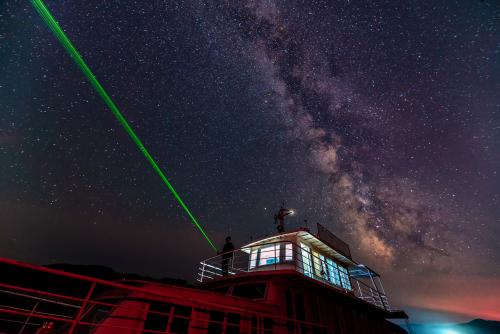
Why Use a Laser Pointer for Stargazing?
Precision Pointing
Unlike vague hand gestures, a bright green or red laser beam clearly pinpoints stars, planets, and constellations, making it ideal for group observations or teaching.
Educational Value
Astronomy educators and tour guides rely on laser pointers to explain celestial movements, constellations, and deep-sky objects without confusion.
Lightweight & Portable
Compared to telescopes, a pocket-sized laser pointer is effortless to carry for camping or star parties.
Key Features of a Good Astronomy Laser
Color Matters: Green lasers (532nm green laser pointer) are most popular because the human eye detects green light 5x better than red.
Power Safety: Most countries limit handheld lasers to ≤5mW (Class 3R) for public use to avoid eye damage or aircraft interference.
Durability: Look for water-resistant and rechargeable designs for outdoor use.
Responsible Use Reminders
Never point at aircraft or people – Even low-power lasers can distract pilots.
Check local laws – Some regions ban high-power lasers.
Pair with a telescope – Use a laser to align or guide others to targets before zooming in.
An astronomy laser pointer bridges the gap between ancient stargazing traditions and modern technology. Whether you’re a teacher, amateur astronomer, or simply marveling at the cosmos, this tool transforms the night sky into an interactive classroom—safely and vividly.
Recent Comments