
The Versatility and Responsible Use of Laser Pointers
Laser pointers, compact optical devices that emit coherent light beams, have evolved from simple presentation tools to instruments with diverse professional and recreational applications. Their precision and portability make them indispensable in multiple fields.
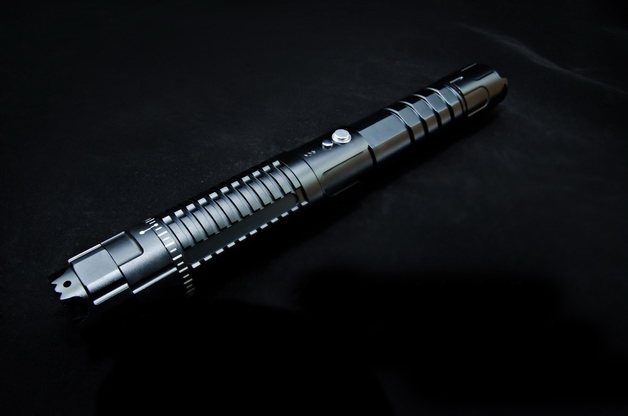
In academic and professional settings, laser pointers serve as effective visual aids during lectures and business presentations. The concentrated beam allows speakers to highlight critical data on projection screens without obstructing the audience’s view—a significant advantage over traditional pointers. Beyond education, medical professionals utilize specialized laser pointers in diagnostic procedures and minor surgical interventions, capitalizing on their pinpoint accuracy.
The scientific community employs high-powered laser pointers in astronomy for celestial object identification and in physics laboratories for optical experiments. Engineers and architects rely on laser alignment tools derived from pointer technology for precision measurements in construction projects. Even in retail and warehousing, laser pointers facilitate inventory management by quickly identifying items on high shelves.
Recreationally, laser pointers provide interactive entertainment for pets, particularly cats, by stimulating their predatory instincts through simulated prey movements. However, this application requires caution, as improper use may cause animal stress or accidental eye exposure.
Despite their utility, laser pointers pose safety risks if misused. The U.S. Food and Drug Administration (FDA) classifies lasers by emission power, with Class 3B and 4 lasers capable of causing instant eye damage or skin burns. Internationally, aviation authorities strictly prohibit laser illumination of aircraft due to the potential for temporary pilot blindness—an offense carrying severe legal penalties in most jurisdictions.
Responsible usage involves selecting appropriate power levels (Class 2 or lower for general use), avoiding reflective surfaces, and never directing beams toward living creatures’ eyes. Technological advancements, such as automatic power reduction when detecting human proximity, are making newer models inherently safer.
As laser technology continues advancing, applications will likely expand into emerging fields like holography and LiDAR systems. This progression underscores the need for ongoing public education about laser safety alongside technological innovation. When used judiciously, laser pointers remain powerful tools that bridge communication, scientific exploration, and precision work across disciplines.
Recent Comments