
The Appearance of a Laser Beam
To the human eye, a laser beam often appears as a perfectly straight, thin rod of light, cutting through space with a brilliant, pure color. It is a line drawn by light itself, so sharp and defined that it seems almost solid. This iconic image, however, is only part of the story. The true appearance of a laser depends on whether we see it in a vacuum or in a medium like air.
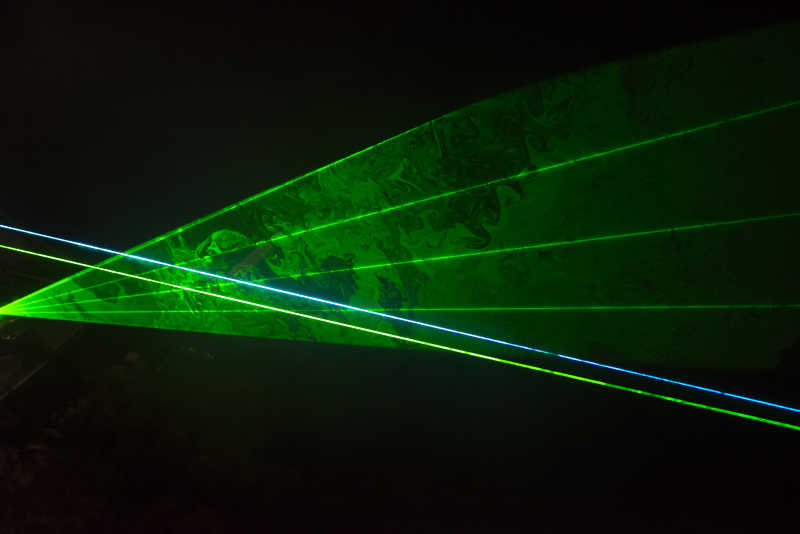
In the perfect emptiness of a vacuum, a laser beam would be completely invisible along its path. On Earth, our atmosphere gives the laser its classic look. The beam becomes visible because countless tiny dust particles, water droplets, and air molecules scatter the intense laser light towards our eyes. This illuminates the entire path, transforming the beam from an invisible line into a luminous pencil of light. A red helium-neon laser, for instance, appears as a solid crimson thread, while a green laser traces a vivid emerald line that seems to vibrate with energy.
The quality of the light is what makes it so distinctive. Unlike the soft, diffuse glow of a light bulb, laser light is coherent and collocated. This means its light waves march in perfect step, allowing the beam to travel great distances with minimal spreading. This creates an intense, concentrated brightness that feels “purer” and more focused than any other light source. When a laser pointer is shone on a wall, it doesn’t create a soft pool of light, but a stunningly bright, sharp dot.
In summary, the laser’s appearance is a marvel of physics. It is the stark straightness of its path, the stunning purity of its color, and the intense, concentrated energy it represents. It is the visible proof of order and control in the realm of light—a slender, brilliant thread connecting human ingenuity to the fundamental laws of nature.
Recent Comments